

Best RV Mattress for Full Time: 2026 Buyer's Guide
Last Updated: October 31, 2026
Quick Summary
The best RV mattress for full-time use is one sized precisely to your bunk or cab, with a firm, supportive base that holds its shape under nightly use. Measure the narrowest point, corner radius and thickness before buying, since these cause most fit failures. Prioritize construction and fit over plush comfort.
- Measure the narrowest point of the platform, not the old mattress.
- Check corner radius, since square corners on rounded platforms block seating.
- Confirm thickness plus platform height leaves clearance to sit up.
- Look for a firm, supportive base that resists compression under daily use.
- A waterproof protector guards against spills and moisture.
Table of Contents
- How We Evaluated These RV Mattress Options
- RV Mattress Size Chart: Matching Dimensions to Your Cab or Camper
- RV Mattress vs Residential Mattress: What Changes on the Road
- Top RV Mattress Picks for Full-Time Sleepers
- Best RV Mattress Topper for Full-Time Use
- Sheets, Storage Pockets and Full-Time Care Costs
- Get Fitted for Your Full-Time Sleep Setup
- Frequently Asked Questions
Full-time RV living puts a mattress through punishment that a typical bedroom never sees. The bed is used every night, the frame flexes with the road, and the sleeping surface has to tolerate humidity, tight dimensions and constant movement. Custom-fit bedding for semi-truck, RV and camper sleeper cabs is built around these demands. Choosing the best RV mattress for full time use starts with understanding those demands.
A mattress that feels fine for a weekend trip can wear out fast under daily use. Full-time sleepers should look closely at firmness retention, edge support and how the surface handles repeated compression. Those factors matter more than marketing claims about comfort alone.
How We Evaluated These RV Mattress Options
The criteria below matter most for daily sleepers, with a focus on fit, construction, materials and practical use in a confined sleeping space.
Start with these checks when comparing any RV mattress:
- Fit: Confirm the exact dimensions of your bunk, cab or camper, not just a nominal size.
- Construction: Look for a firm, supportive base that holds its shape under nightly use.
- Protection: Consider whether a protector or waterproof layer will guard against spills and moisture.
- Bedding compatibility: Check that sheets are sized to the mattress, including any storage pockets you want.
RV Mattress Size Chart: Matching Dimensions to Your Cab or Camper
Size is the first decision that can make or break a purchase, and it is where most full-time RVers get burned. A mattress that is a half-inch too wide will not sit flat in a bunk, and one that is too thick can block a slide-out or press against a cabinet door. Measure the sleeping area at its narrowest point, including any curves, wheel wells, or trim, and compare that measurement to the mattress listing before you order. Many sleeper cabs and camper bunks use non-standard sizes, so a standard residential size often will not fit.
A practical measurement checklist
Work through these checks in order before you buy:
- Length and width at the narrowest point. Measure the platform, not the old mattress. Foam and coil units compress and relax over time, so a worn mattress can read smaller than the space it sits in.
- Corner radius. Many RV and sleeper-cab mattresses have rounded corners to clear cabinetry or door frames. Measure the radius of the platform corner and confirm the replacement matches; a square corner on a rounded platform leaves a gap or prevents the mattress from seating.
- Thickness and overhead clearance. Add the mattress thickness to the platform height and compare it to the ceiling or cabinet above. A 6.5-inch mattress plus bedding may be the maximum that lets you sit up or close a bunk curtain.
- Slide-out and access clearance. If the bed sits in a slide-out, confirm the mattress does not rub the wall or frame when the slide retracts. Also check the path from the entry door to the bed, a mattress that cannot bend around a corner will not go in, no matter how well it fits once installed.
- Platform access. If you need to lift the mattress to reach under-bed storage, note the weight and flexibility of the replacement. A thick coil unit can be difficult to lift in a confined space.
Common size profiles to compare against
Use these listed dimensions as reference points when matching bedding and mattresses in the JAKES CAB SOLUTIONS catalog:
- Semi-Truck Sleeper Sheet Set: listed at 32x80x7.5, useful if you are matching bedding to a sleeper mattress of that profile.
- Mustard Bed Sheets: listed at 80x54x7.5.
- Semi-Truck Mattress 6.5" Coiled Mattress: available in multiple sizes; confirm the listed dimensions against your own measurements before ordering.
Always compare the listed dimensions against your own measurements. If a listing does not state corner radius or thickness, ask before you buy, those two numbers cause more fit failures than length and width combined.
Before you buy, check these measurements against your own space; the article flags corner radius and thickness as the most common causes of fit failure.
| Check | What to measure | Why it matters |
|---|---|---|
| Length and width | Narrowest point of the platform | Confirms the mattress sits without gaps |
| Corner radius | Rounded platform corners | Square corners on a rounded platform block seating |
| Thickness | Mattress height plus platform height | Keeps clearance for sitting up and closing bunk curtains |
| Slide-out clearance | Path when the slide retracts | Prevents rubbing against walls or frame |
| Platform access | Weight and flexibility of the mattress | Makes lifting for under-bed storage manageable |
RV Mattress vs Residential Mattress: What Changes on the Road
A residential mattress is designed for a stationary bed in a room with stable temperature, steady humidity, and open space on all four sides. An RV mattress has to work within tighter clearances, lighter structural support, and more moisture exposure. Those differences change how long a bed lasts and how it feels after months of use, and they are the reason a mattress that feels fine for a weekend trip can wear out fast under daily living.
The four forces that shorten mattress life in an RV
Vibration and road flex. Every mile sends low-level vibration through the frame and into the mattress. Coil units and dense foam handle this differently: a firm, supportive base that holds its shape under repeated compression tends to resist breakdown better than a soft pillow-top layer that packs down.
Humidity and condensation. RVs trap moisture. Cooking, showering, breathing, and weather changes push humidity into the cabin, and a mattress sitting on a solid platform has little airflow underneath. Condensation can collect between the mattress and the platform, which is why breathable materials and an under-mattress airflow layer matter more in an RV than in a house.
Temperature swings. A parked RV can heat well above indoor room temperature during the day and cool sharply at night. These fluctuations become even more complex when sharing a bed, necessitating a mattress for different needs to ensure both partners remain comfortable regardless of the ambient climate.
Weight and platform limits. RV bed platforms and slide-out mechanisms are built lighter than residential bed frames. A heavy mattress adds load to the slide mechanism and makes lifting the platform for storage harder. Compare the mattress weight against what the platform and slide are rated to carry, and factor in the effort of maneuvering it into a confined space.
Semi-Truck Mattress 6.5" thick on coiled mattress →
What this means for full-time buyers
For full-time living, the biggest change is the margin for error. A residential bed can often tolerate a loose fit, while an RV mattress needs precise sizing to avoid gaps and shifting. A mattress that shifts with every turn creates pressure points and wears unevenly. Prioritize a firm, supportive base, precise dimensions, and a breathable underside over plush surface comfort, then add a topper only if pressure relief is still lacking after the base mattress is right.
For a broader look at keeping a mattress in good condition between replacements, read How To Care For Your Mattress Dos And Donts.
Top RV Mattress Picks for Full-Time Sleepers
The JAKES CAB SOLUTIONS Semi-Truck Mattress is a firm, supportive option built for long hauls. It is available in multiple sizes.
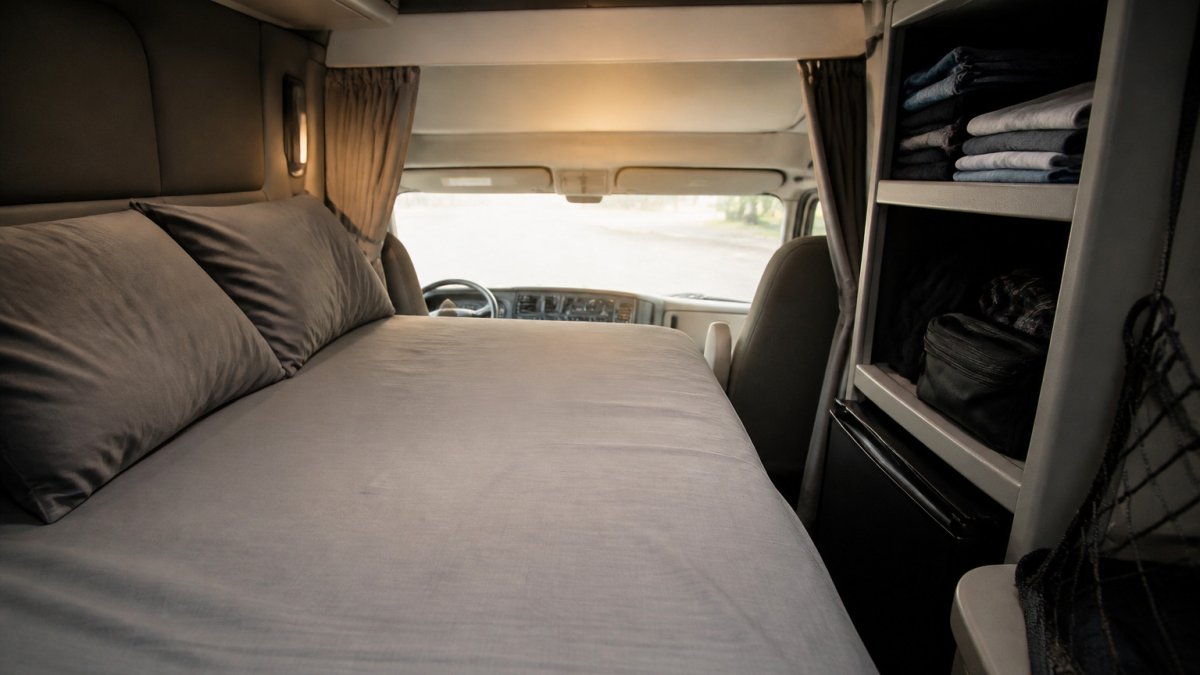
Semi-Truck Mattress 6.5" Coiled Mattress
This coiled mattress is listed at $269.99 and is designed for firm, durable support. It is built for daily use in semi-truck sleeper cabs and works in multiple sizes to fit your truck bed.
Shop the Semi-Truck Mattress 6.5" Coiled Mattress: Semi-Truck Mattress 6.5" Coiled Mattress

Mattress and Pillow Protector Bundle
The mattress and pillow protector bundle is listed at $39.99 and adds a waterproof barrier against spills, sweat and accidents. The protector is machine washable and comes with a free pillow protector included in the bundle.
See the Mattress and Pillow Protector Bundle and its size options: Mattress and Pillow Protector Bundle

Best RV Mattress Topper for Full-Time Use
A topper can add comfort without replacing the whole mattress, but it adds height, which can affect clearance in tight spaces. Measure your cab or camper before adding any layer. If your current mattress is firm and supportive, a topper may be unnecessary. Focus first on fit and construction, then consider a topper only if pressure relief is still lacking after the base mattress is right.
Sheets, Storage Pockets and Full-Time Care Costs
Our Silver Grey Bed Sheet Set is listed at $44.99 and is designed to fit semi-truck, RV and camper mattresses. The Brown Bed Sheets and White Bed Sheets are each listed at $29.99.

Care is simple: the sheet sets are listed as machine washable. For a broader look at mattress upkeep, read How To Care For Your Mattress Dos And Donts.
Get Fitted for Your Full-Time Sleep Setup
Choosing the best RV mattress for full time comes down to measuring your space, matching the construction to your daily use and budgeting for bedding and protection. Start by confirming your dimensions, then compare the options in the JAKES CAB SOLUTIONS catalog.
Frequently Asked Questions
Is it worth buying a real mattress for an RV?
For full-time living, usually yes. Factory RV mattresses are often thin and built for occasional weekend use, so they wear out quickly under daily sleep. A purpose-built mattress with a firm coiled core, such as the 6.5-inch Semi-Truck Mattress from JAKES CAB SOLUTIONS at $269.99, is designed to hold its shape over years of nightly use. Weigh the upfront cost against replacing a worn-out mattress every few years, and check the fit against your sleeping space before you order.
How long do RV mattresses usually last?
Lifespan depends on construction and how much you sleep on them. Many occasional-use RV mattresses start sagging within a few years, while full-time sleepers notice wear sooner. Choose a firm coiled mattress with a sturdy support core, rotate it regularly if the cab allows, and use a waterproof protector to guard against moisture. The JAKES CAB SOLUTIONS Mattress and Pillow Protector, priced at $39.99, helps protect the mattress from spills and sweat.
Can you put a regular mattress in an RV?
Sometimes, but it is risky. Standard residential mattresses are often thicker and heavier than the space allows, which can cause fit problems, poor support and extra weight on the frame. Measure the sleeping area carefully, including height clearance and cab dimensions, before buying. Mattresses sized specifically for semi-truck, RV and camper sleeper cabs are generally the safer choice for a precise fit.
What is the difference between an RV mattress and a regular mattress?
RV mattresses are typically built to odd sizes, lower profiles and lighter weights so they fit compact sleeping spaces. Residential mattresses come in standard sizes such as Twin, Full, Queen and King, and are often taller. Full-time sleepers also need to think about moisture and condensation, since sleeping in a vehicle can create humidity. Look for fit, support and easy-care features designed for the road, not just comfort ratings.
How do I choose the right size mattress for my RV?
Start by measuring the length, width and usable height of your sleeping area, then compare those numbers against the size chart for each product. Note any curved walls, cab shapes or storage areas that reduce the usable footprint. Custom-fit options for semi-truck, RV and camper sleepers, including sizes such as 80x54x7.5 for certain mattress and sheet sets, help avoid gaps and slippage. Confirm the dimensions with the seller before ordering.


