

7 Truck Driver Back Pain Relief Fixes That Actually Work
Last Updated: October 30, 2026
Quick Summary
Truck driver back pain relief starts with a correctly adjusted seat: hips slightly higher than knees, backrest at 100 to 110 degrees, and lumbar support pressing into the lower-back curve. Add a cushion matched to your specific symptom, stretch at every rest stop, and sleep on a supportive sleeper mattress.
- Recline the backrest to roughly 100 to 110 degrees rather than sitting bolt upright.
- Adding more than about an inch of cushion height reverses the seat-pan angle you set.
- Hold each rest-stop stretch for roughly 30 seconds per side and breathe rather than bounce.
- Walk a lap around the truck before stretching so you are not stretching cold muscles.
- Our 6.5-inch coiled semi-truck mattress runs $269.99 and is built for specific cab models.
Table of Contents
- Why Truck Driver Back Pain Relief Starts in the Cab
- Ergonomic Seat Adjustment: The First Line of Truck Driver Back Pain Relief
- Choosing a Truck Driver Seat Cushion for Back Pain
- Stretches for Truck Drivers You Can Do at a Rest Stop
- Building an Ergonomic Sleeper Cab Setup for Better Sleep and Less Pain
- Order a Custom-Fit Semi-Truck Mattress for Your Sleeper Cab
- Frequently Asked Questions
Why Truck Driver Back Pain Relief Starts in the Cab
Truck driver back pain relief rarely begins with a pill or a clinic visit. It begins with the seat you sit in for eleven hours a day.
The cause is not mysterious. The Occupational Safety and Health Administration guidance on ergonomics treats prolonged sitting and vibration as recognized workplace stressors, and driving is a textbook case.
Below, we walk through seven fixes that address the actual source of the problem, starting with the cab itself. A seat organizer keeps essentials within reach and clutter off the floor. Most guides tell you to stretch more. That advice is incomplete without first fixing what you sit on.
Ergonomic Seat Adjustment: The First Line of Truck Driver Back Pain Relief
Before you buy anything, adjust what you already own. A correctly set seat removes a surprising share of daily strain.
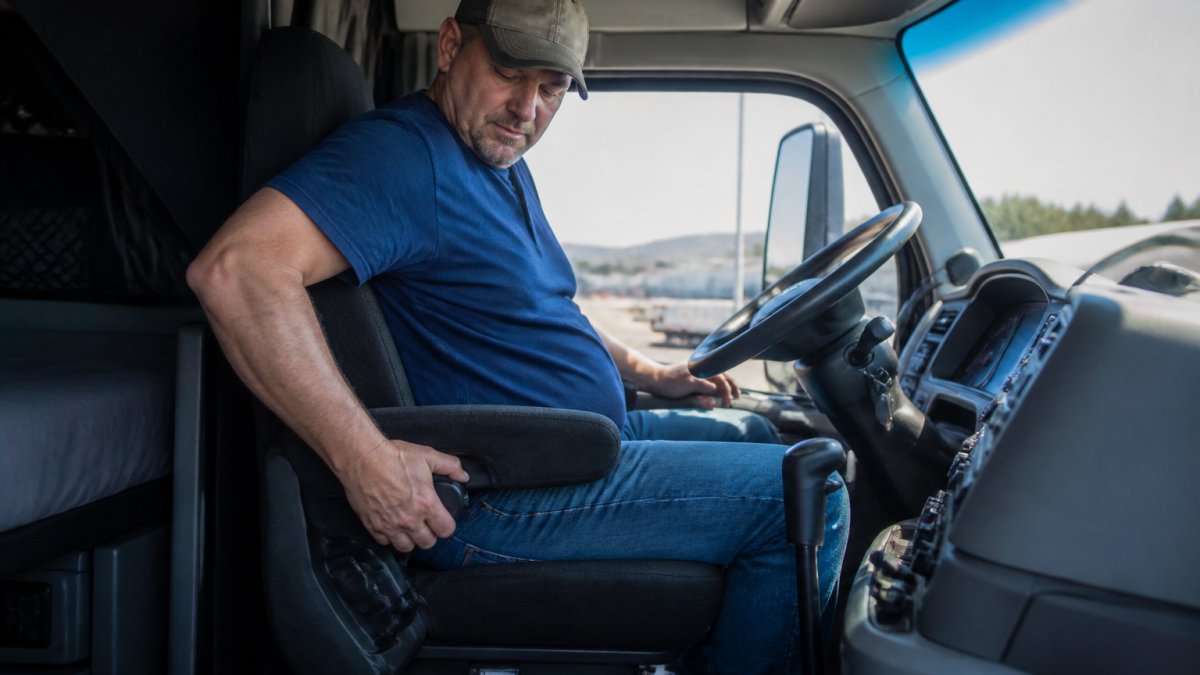
Start with the seat pan: hips should sit slightly higher than knees, with a fist-width gap behind the knee. Recline the backrest to roughly 100 to 110 degrees, not bolt upright.
Dialing In Lumbar Support and Steering Wheel Grip
A common mistake is cranking lumbar support to maximum and leaving it there. That flattens the natural curve and creates its own muscular fatigue. Adjust it until you feel gentle pressure, then recheck it after an hour of driving. For steering wheel grip, the goal is elbows at roughly 120 degrees. If you are stretching to reach the wheel, you are loading your upper back with every mile.
Choosing a Truck Driver Seat Cushion for Back Pain
A truck driver seat cushion for back pain is not a universal fix. It works only when it corrects the specific gap your factory seat leaves, and the wrong cushion can undo every adjustment you just made. The practical approach is to diagnose your seat first, then buy to fill the deficit.
Match the Cushion to the Deficit, Not the Aisle Display
Most factory seats in Peterbilt, Freightliner, and Volvo cabs share the same weak points: a seat pan that slopes the hips backward, a lumbar bladder that bottoms out after a few hours, and a foam layer that compresses under a driver's weight by mid-shift. Before shopping, sit in your cab and note which of these three problems you actually feel.
- Tailbone pressure or numbness points to a seat pan that is too flat or too firm. A cushion with a coccyx cutout removes pressure from the tailbone and reduces nerve compression on long stretches.
- Lower-back ache that builds through the day usually means the lumbar curve is unsupported. A cushion with a built-in lumbar roll or an adjustable air bladder holds the curve better than a flat pad.
- Sciatic pain running down one leg often responds to a wedge that tilts the pelvis slightly forward, taking load off the sciatic nerve. A flat cushion tends to make this worse.
The Measurements That Matter
Cushion height is the spec almost no one checks, and it is the one that wrecks seat geometry. Adding more than about an inch of cushion height pushes your hips higher than your knees, reverses the seat-pan angle you set earlier, and forces your lower back into flexion.
A firm core matters more than a soft one. Squishy gel feels good for the first twenty minutes and then lets your hips sink until the foam bottoms out against the seat frame.
A Note on Model-Specific Fit
Seat pans differ across cab models, and a cushion sized for a wide aftermarket seat can overhang a narrower factory pan and dig into the back of your knees. If you drive a specific model regularly, measure the pan width and depth and compare against the cushion's listed dimensions rather than trusting a generic "fits most trucks" label.
Match the cushion to the problem you actually feel in your cab.
Semi-Truck Mattress 6.5" thick on coiled mattress →
| Symptom | Likely cause | Cushion fix |
|---|---|---|
| Tailbone pressure or numbness | Seat pan too flat or too firm | Coccyx cutout cushion |
| Lower-back ache that builds through the day | Lumbar curve unsupported | Built-in lumbar roll or adjustable air bladder |
| Sciatic pain down one leg | Pelvis not tilted forward | Wedge that tilts the pelvis slightly forward |
| Cushion slides during turns and braking | Slippery base | Non-slip base |
| Cushion bottoms out mid-shift | Soft, squishy core | High-density foam or memory foam core |
| Hips pushed higher than knees | More than about an inch of cushion height | Measure cushion height against seat pan |
Stretches for Truck Drivers You Can Do at a Rest Stop
Stretches for truck drivers work best when they target the muscles that actually shorten during driving: hip flexors, hamstrings, chest, and lower back. A short stretching routine at each rest stop beats one long session a week, because the goal is to interrupt the shortening cycle before it becomes a knot. Maintaining this physical mobility often requires a holistic approach that includes targeted supplements for drivers to support muscle recovery and joint health during long hauls.
A Five-Minute Rest-Stop Routine
Hold each stretch long enough to let the muscle lengthen, roughly 30 seconds per side, and breathe rather than bounce.
- Standing hip flexor stretch, 30 seconds per side. Step one foot forward into a lunge and tuck the pelvis under until you feel the front of the rear hip lengthen. This is the single most important stretch for drivers, because the seated position shortens the hip flexors all day.
- Doorway chest stretch, 30 seconds per side. Place a forearm on the cab door frame and turn away to open the chest. This counters the forward reach to the steering wheel that rounds the upper back.
- Standing hamstring stretch with one foot on the step, 30 seconds per side. Keep the back flat and hinge at the hips rather than rounding the spine.
- Cat-cow spinal alignment, 10 slow reps on hands and knees or seated. Move segment by segment through the spine rather than cranking the neck.
- Gentle torso twist, holding the catwalk rail for balance, 20 seconds per side. Rotate from the ribcage, not the lower back.
In-Cab Mobility Exercises for Long-Haul Driving
You do not need to leave the cab to move, and this is where most guides stop short. In-cab mobility exercises keep range of motion alive during a long stretch of long-haul driving by breaking up the repetitive strain that builds when you hold one position for hours. The key is micro-movements, small, frequent, and safe while parked or during a short fuel stop.
- Shoulder rolls at every red light or fuel stop: five slow rolls forward, five back, to reset the upper back.
- Seated knee extensions while waiting to load: extend one leg until the knee is straight, hold two seconds, lower slowly. Ten per side wakes up the hamstrings and quads.
- Seated pelvic tilts: rock the pelvis forward and back ten times to mobilize the lower back without leaving the seat.
Why the Timing Matters
Stretching cold muscles after hours of sitting is less effective than stretching at the end of a short walk. Walk a lap around the truck first to raise blood flow, then stretch. And treat the routine as maintenance rather than treatment: if a stretch produces sharp pain or numbness that travels down a leg, stop and treat it as a signal to get evaluated rather than pushed through.
Building an Ergonomic Sleeper Cab Setup for Better Sleep and Less Pain
An ergonomic sleeper cab setup is where recovery happens, and recovery is what makes tomorrow's drive bearable. Custom-fit cab curtains add privacy and comfort to that setup. The mattress matters most. Polar fleece blankets can further enhance sleep quality on the road.
Our semi-truck mattresses feature a 6.5-inch coiled design for firm, supportive rest, and are designed for specific models like Peterbilt, Freightliner, and Volvo.
Order a Custom-Fit Semi-Truck Mattress for Your Sleeper Cab
Custom fit matters when your bunk is an odd shape. Before ordering, measure your sleeper cab carefully, then match the dimensions to the right size.
Our 6.5-inch coiled semi-truck mattress is designed around specific cab models and runs $269.99. A mattress and pillow protector bundle is available at $39.99.
Watch out: guessing your bunk size is the single most common ordering mistake. Measure twice.
Frequently Asked Questions
Does a seat cushion help with lower back pain?
A seat cushion can help, but only when it matches the problem. A cushion with a cutout at the tailbone reduces pressure on the lower spine, while a wedge-shaped cushion tilts the pelvis forward and supports spinal alignment. Pair the cushion with proper ergonomic seat adjustment and regular breaks. A cushion alone will not fix truck driver back pain caused by a worn or unsupportive sleeper mattress, so address both the seat and the bed.
What exercises can truck drivers do to relieve back pain?
Start with a short stretching routine at every rest stop: standing hip flexor stretches, seated spinal twists, shoulder rolls, and gentle hamstring stretches through the range of motion. Add core strengthening at home or during downtime with modified planks and pelvic tilts. In-cab mobility exercises like ankle pumps and seated knee lifts keep blood moving during long-haul driving. Ten minutes of movement every few hours beats one long session at the end of the day.
How can I improve my posture while driving a semi-truck?
Set the seat so your hips sit slightly higher than your knees, recline the backrest to roughly 100 to 110 degrees, and adjust lumbar support so it fills the curve of your lower back. Keep the steering wheel grip relaxed with elbows slightly bent, and position the mirrors so you are not craning your neck. Posture correction on long-haul driving is mostly about the seat setup, not willpower, so get the ergonomic seat adjustment right first.
What are red flags that back pain needs medical attention?
See a doctor if you have numbness or tingling down the leg, weakness in a foot, loss of bladder or bowel control, pain that wakes you at night, or pain after a fall or collision. These can point to nerve compression or a work-related injury that needs more than a stretch routine. Ordinary muscular fatigue from long-haul driving usually eases with movement and better sleep, but red flags should be checked by a physical therapist or physician promptly.
Your back does not have to be the price of the job. Adjust the seat, add the right cushion, stretch at stops, and give yourself a bunk that actually supports your spine. JAKES CAB SOLUTIONS makes custom-fit mattresses and sheet sets with storage pockets built for Peterbilt, Freightliner, and Volvo sleeper cabs, so you sleep better and drive safer. Get started with JAKES CAB SOLUTIONS and wake up without the ache.


