

Breathable Sheets for Hot Sleepers: A Trucker's Guide
Last Updated: November 1, 2026
Quick Summary
Breathable sheets for hot sleepers are made from fabrics that move air and moisture instead of trapping them, such as cotton percale, linen, or a lightweight brushed-polyester blend. Look for an open weave, a light fabric weight, and a snug fit that keeps air channels open all night.
- Fabric weight in GSM is the most reliable predictor of heat retention, more than thread count.
- A lightweight percale in the 110-130 GSM range breathes better than a 300-thread-count sateen.
- The Semi-Truck Sleeper Sheet Set (32x80x7.5) fits that exact bunk size at $44.99.
- Skip heavy fabric softener, which coats fibers and reduces breathability.
- Sheet sets are priced from $29.99 for the White Bed Sheets up to $44.99.
Table of Contents
- Why Breathable Sheets Matter for Hot Sleepers on the Road
- What Sheet Material Is Good for Hot Sleepers?
- The Best Sheets for Hot Sleepers in a Sleeper Cab
- Cooling Sheets for Hot Sleepers: What Actually Helps
- Custom-Fit Truck Sleeper Cab Sheets: Getting the Fit Right
- Durability, Pilling, and Long-Term Care on the Road
- Choosing Your Breathable Sheet Set for the Cab
- Frequently Asked Questions
Why Breathable Sheets Matter for Hot Sleepers on the Road
A sleeper cab is a small, sealed box, and that changes everything about how you sleep. Breathable sheets for hot sleepers matter because the fabric against your skin decides whether body heat and sweat escape or get trapped against you all night.
At JAKES CAB SOLUTIONS, we build bedding around that exact problem: small spaces, limited ventilation, and drivers who need real rest before a long shift.
Your body cools itself by releasing heat and moisture through the skin. A sheet that blocks that process keeps you damp and warm; one that lets air move pulls heat away and dries moisture fast.
What Sheet Material Is Good for Hot Sleepers?
The best sheet material for hot sleepers is one that moves air and moisture rather than holding them. That usually means natural fibers like cotton and linen, or a lightweight brushed-polyester blend engineered for airflow. Heavy, tightly woven fabrics trap heat, which is the opposite of what a warm sleeper needs.
Breathability is the fabric's ability to let air pass through it. Moisture-wicking is how well it pulls sweat away from your skin. Both matter, and they are not the same thing.
What Actually Makes Sheets Breathable
Most cooling claims describe how a fabric feels at first touch, not how it performs across a night. Four construction variables decide whether air and moisture can move:
- Fiber. Natural cellulose fibers like cotton and linen absorb and release moisture; long-staple cotton resists pilling better than short-staple cotton. Synthetic fibers like polyester are naturally hydrophobic, so a brushed-polyester blend has to be engineered, usually with a finer denier and a looser knit or weave, to let air through.
- Weave. Percale is a one-over, one-under plain weave with a tight, matte surface and a relatively open structure that lets air pass. Sateen is a three-over, one-under weave that floats more threads across the surface; it feels smoother and drapes heavier, which is why it traps more heat. Linen is typically a plain weave with irregular, thicker yarns that create natural air channels.
- Fabric weight. Measured in grams per square meter (GSM), weight is the single most reliable predictor of heat retention. A lightweight percale in the 110-130 GSM range breathes noticeably better than a 300-thread-count sateen, even when both are 100% cotton. Thread count alone tells you almost nothing about breathability, a high count can simply mean finer, more tightly packed threads.
- Finish. Softening treatments, calendering (pressing the fabric smooth between rollers), and heavy fabric softener all coat or flatten fibers and close off airflow. A crisp, uncalendered percale breathes better than a brushed, calendered one of the same fiber.
Fiber, Weave, and Fabric Weight Compared
Fiber, weave, and weight work together. Fiber is the raw material. Weave is how threads are crossed. Weight is how dense the finished fabric feels. A lightweight cotton percale breathes better than a heavy sateen because the weave is open and the fabric is thin.
| Material | Breathability | Moisture Handling | Feel | Best For |
|---|---|---|---|---|
| Cotton percale | High | Good | Crisp, cool | Warm sleepers who like a crisp feel |
| Linen | Very high | Very good | Textured, cool-to-the-touch | Hot climates, night sweats |
| Brushed polyester blend | Moderate to high | Good | Silky soft, smooth | Durable, easy-care cab bedding |
| Cotton-polyester blend | Moderate | Moderate | Smooth | Budget sets, all-season use |
Compare options on the same three criteria, how open the weave is, how much the fabric weighs, and whether the finish closes the surface. Two 100% cotton sheets can perform very differently if one is a lightweight percale and the other a heavy sateen. "100% cotton" on a label is a starting point, not a guarantee. Matching these bedding characteristics with appropriate breathable sleepwear options ensures that your body heat dissipates efficiently throughout the night.
For deeper guidance on picking a microfiber set that fits a sleeper cab, our guide on how to pick the perfect microfiber sheet set walks through the trade-offs.
The Best Sheets for Hot Sleepers in a Sleeper Cab
The best sheets for hot sleepers in a sleeper cab combine breathable fabric with a fit that stays put. A loose sheet bunches, traps heat, and wakes you up; a snug, breathable set keeps airflow steady all night.
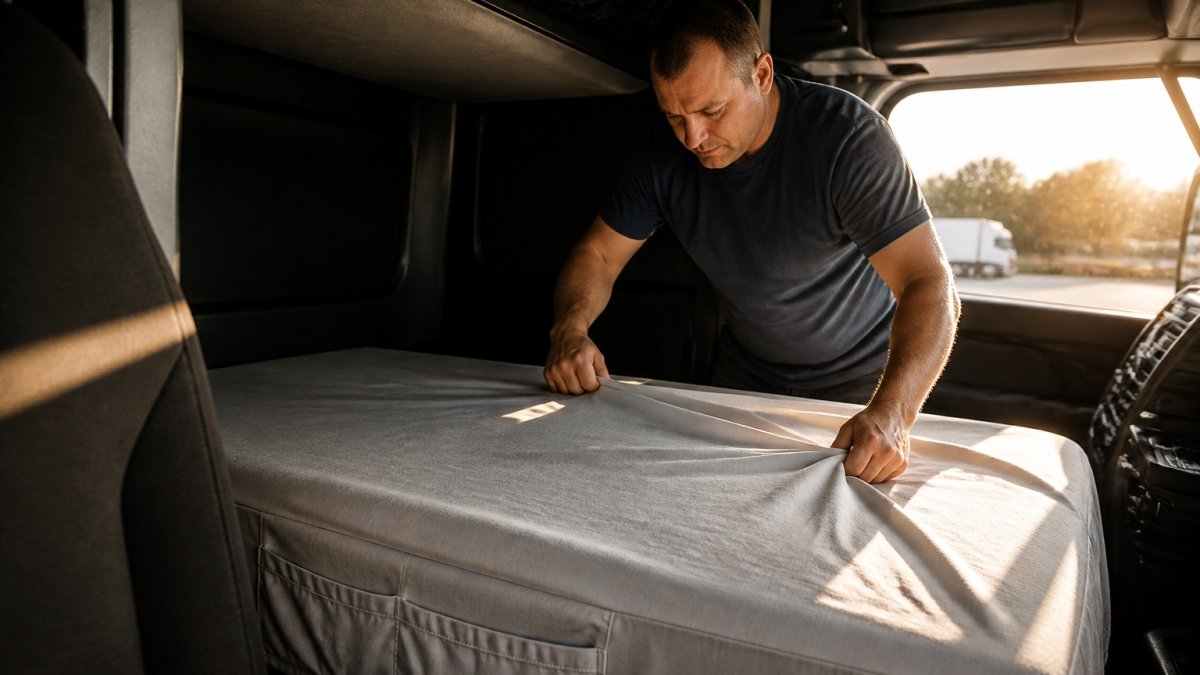
Our Semi-Truck Sleeper Sheet Set (32x80x7.5) is designed to fit a 32x80x7.5 bunk at $44.99.
The Silver Grey Bed Sheet Set at $44.99 is sized for semi-truck, RV, and camper mattresses.

Cooling Sheets for Hot Sleepers: What Actually Helps
Cooling sheets for hot sleepers help most when they address airflow and moisture, not just a cool-to-the-touch surface. A fabric can feel cool when you first lie down and still trap heat an hour later.
Three things drive cooling performance:
- Airflow through the weave. An open weave lets body heat escape instead of pooling.
- Moisture-wicking fibers. Sweat moves away from skin and evaporates rather than sitting damp.
- A snug fit. A sheet that stays flat keeps air channels open; a bunched sheet creates hot pockets.
A common mistake is buying a sheet that only feels cool at first touch. Long-term comfort depends on the weave staying open and the fit staying tight.
Match the Sheet to Your Sleep Conditions
Most buying guides give one answer for every sleeper. In practice, the right sheet depends on the conditions in your bunk:
White Bed Sheets, Fits Semi-Truck/RV/Camper Mattresses – Assorted Sizes →
- Humid summer, no air conditioning. Moisture handling matters more than airflow alone. Linen and lightweight percale both wick and dry quickly; a smooth sateen or a tightly calendered fabric will feel clammy by 2 a.m. because sweat cannot evaporate off the surface.
- Dry heat with a fan or cracked window. Airflow is the priority. A lightweight percale or an open-weave linen lets the fan move air across your skin; a heavy fabric blocks that movement even if the room air is dry.
- Cold snap with the bunk heater running. Counterintuitively, stay with a lightweight breathable fabric. A heavy sheet plus a heater plus blankets is the classic overheating setup, the breathable layer lets heat escape before it builds under the covers.
- Night sweats. Look for moisture-wicking fibers first and a fit that stays flat second. A bunched sheet creates damp pockets that stay wet against your skin; a smooth, snug sheet lets moisture spread and evaporate.
- Sharing the bunk. Two sleepers produce roughly twice the heat and moisture in a small space. Prioritize breathability over softness, and consider a lighter blanket so the shared heat has somewhere to go.
Custom-Fit Truck Sleeper Cab Sheets: Getting the Fit Right
Custom-fit truck sleeper cab sheets are sized to specific mattress dimensions, so the set you order should match your bunk.
Fit starts with measurement. Our guide on how to measure your sleeper cab for the perfect mattress fit shows exactly where to place the tape so you order the right size the first time.
If you already know your bunk dimensions, the Semi-Truck Sleeper Sheet Set (32x80x7.5) is built for that exact size, so you can confirm the fit before checkout.
Watch out: ordering a sheet by "standard twin" instead of your actual bunk measurement is the most common fit mistake.
Durability, Pilling, and Long-Term Care on the Road
Durability decides whether a breathable sheet stays breathable. Pilling closes off airflow and makes a sheet feel rough; shrinkage pulls a snug fit loose. Both shorten the life of a set that was comfortable on day one.
Care habits make the difference:
- Wash in cool or warm water, not hot, to limit shrinkage and fiber damage.
- Skip heavy fabric softener, which coats fibers and reduces breathability.
- Tumble dry low or line dry to protect the weave.
- Wash regularly; sweat and body oils break down fibers faster than friction does.
Quick-wash and quick-dry fabrics suit truck life because you can launder them between loads without waiting around. Our article on the benefits of quick-wash and quick-dry sheets for semi-truck beds explains why that matters for a driver on a tight schedule.
Our Blue 4-Piece Bed Sheet Set is made from a brushed-polyester blend and is machine washable.

Choosing Your Breathable Sheet Set for the Cab
Choosing breathable sheets for hot sleepers comes down to three checks: material, fit, and care.
Use this decision guide:
- If you overheat easily and like a crisp feel: choose a cotton percale or cotton-rich set.
- If you sweat heavily or sleep in a warm climate: prioritize linen or a moisture-wicking lightweight fabric.
- If you want low-maintenance durability: a brushed-polyester blend with quick-dry care fits the bill.
- If your bunk is a non-standard size: order a custom-fit set measured to your mattress, not a generic size.
- If storage space is tight: look for fitted sheets with built-in pockets.
Budget matters too. Our sheet sets are priced from $29.99 for the White Bed Sheets up to $44.99 for several complete sets. You can browse the full range of semi-truck sheet sets to compare colors and sizes side by side.

Measure before you buy. A breathable fabric in the wrong size will still bunch and trap heat; a precise fit keeps the airflow you paid for.
Your bunk should be the one place on the road where you actually recover. If your current bedding leaves you damp, overheated, and short on sleep, the fix starts with the right fabric and the right fit.
Frequently Asked Questions
What sheet material is good for hot sleepers?
Natural fibers that move air and moisture are the safest bet. Cotton percale has a crisp, open weave that lets heat escape, and linen's hollow flax fibers wick sweat and dry fast. Avoid heavy sateen weaves and high thread counts, which trap heat against the body.
Are cooling sheets for hot sleepers worth it in a truck cab?
Yes, if you pick the right construction. Cooling sheets for hot sleepers work by improving airflow and moisture-wicking, not by refrigerating you. In a sleeper cab, where space is tight and ventilation is limited, a breathable lightweight fabric makes a bigger difference than any marketing claim. Pair breathable sheets with a cracked window or cab fan, and you will notice less tossing and fewer night sweats. Look for fabric that feels cool to the touch and dries quickly after washing.
How do I know custom-fit truck sleeper cab sheets will fit my mattress?
Measure your mattress before ordering: length, width, and depth. Sleeper cab mattresses vary by model, and a set built for a 32x80x7.5 inch bunk will not fit a 78x28 inch mattress. Custom-fit truck sleeper cab sheets are sized to specific dimensions, and deep-pocket fitted sheets stay put through the night. If you are unsure, check the product listing for the exact size it covers, and confirm your mattress depth falls within the pocket range.
Do moisture-wicking sheets help hot sleepers who sweat at night?
Moisture-wicking sheets are designed to pull sweat away from the skin so it can evaporate more readily. Wash sheets weekly to keep the fibers free of oils and sweat residue.
How should I care for breathable sheets to keep them cool and durable?
Machine wash in cool or warm water with a mild detergent, then tumble dry low or line dry. Hot water and high heat break down fibers, cause shrinkage, and encourage pilling, which reduces breathability over time. Skip fabric softener because it coats fibers and blocks airflow. Rotate between two sets so each one gets a rest, and inspect seams and pockets every few washes. With proper care, a quality breathable sheet set holds its fit and cooling performance for years of long hauls.


